Source Multi Function Manual Fitness Equipment for Gym, Home, Community
Find 30 listings of multi function manual fitness equipment designed for strength exercise in gyms, homes, and community centers. Buyers can compare specifications like weight capacity, tube size, and certifications to select suitable options for indoor use.
Key considerations
Products List


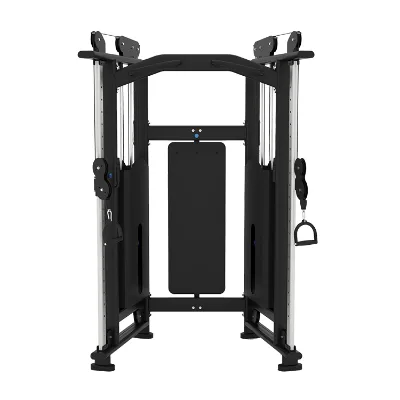


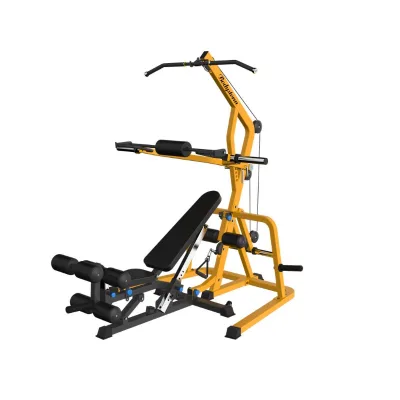


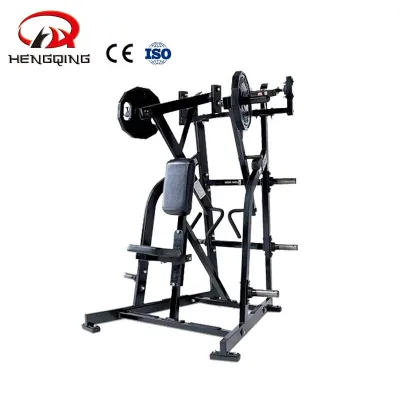


Comprehensive Sourcing Guide
Strategic Sourcing Guide for Multi-Function Manual Fitness Equipment
The global market for multi-function manual fitness equipment represents a critical segment for procurement teams seeking durable, low-maintenance solutions for commercial gyms, community centers, and amusement facilities. Unlike motorized counterparts, manual equipment relies on user-generated force, offering distinct advantages in energy efficiency and mechanical longevity. This guide synthesizes observed market data and technical specifications to provide a disciplined framework for sourcing these assets. Buyers must navigate a landscape where product attributes vary significantly between amusement park installations and specialized gymnasium strength trainers. The following sections detail the technical parameters, compliance requirements, and evaluation strategies necessary for successful procurement.
Technical Specifications and Construction Materials
The foundational aspect of sourcing manual fitness equipment lies in understanding the specific construction materials and dimensional standards that define product durability. The supplied data indicates a prevalence of steel as the primary structural material, specifically citing Q235 Carbon Steel as a standard for certain models. This material choice is critical for withstanding the high stresses associated with anaerobic exercise and strength training. For instance, specific models utilize tube dimensions such as PT501002.5t, which suggests a robust framing system designed to support significant loads.
When evaluating technical specifications, buyers must distinguish between equipment designed for adult use and those intended for younger demographics. The market data reveals a bifurcation in product lines: some units are explicitly rated for an age group of 3-12 years and are categorized under amusement park obstacle projects, while others are designed for adults with a maximum load capacity of 150kg. The structural integrity of adult-grade equipment is further evidenced by maximum steel cable load capacities reaching 900kg and pulley specifications of $\phi$105mm. These figures indicate that the equipment is engineered for heavy-duty commercial environments rather than light residential use.
Dimensional variance is another key technical consideration. Observed specifications range from compact units measuring 2320×1120×530mm to large-scale installations with dimensions of 960840320cm or 268523952165mm. Procurement teams must align these physical requirements with the available floor space of the intended facility. Furthermore, the weight of the units is substantial; observed net weights range from 364.5kg to 380kg, with gross weights extending to 409kg. This mass is a direct indicator of stability, a crucial factor for multi-function stations where users perform dynamic movements.
Compliance, Certification, and Safety Standards
In the realm of fitness equipment, compliance is not merely a regulatory formality but a prerequisite for liability management and user safety. The observed market data highlights a consistent requirement for international certifications, specifically CE, ISO, RoHS, TUV, and GS. These certifications serve as third-party validations that the equipment meets specific safety and environmental standards. For example, the presence of TUV and GS certifications often implies rigorous testing for mechanical safety and electrical compliance, even in manual systems where electrical risks are minimal but mechanical failure risks remain high.
Buyers must verify that the "Allowable Passenger" or load capacity claims are backed by these certifications. The data notes a certification standard of "CE,ISORoHS" for certain models, while others specifically list TUV and GS. It is essential to understand that these certifications are not generic; they are tied to specific product models and manufacturing processes. For instance, the production technology of rotational moulding is observed in amusement park contexts, whereas steel fabrication is standard for gymnasium strength equipment. The certification status must match the specific manufacturing process and intended application.
The distinction between "Home," "Gymnasium," and "Community" appliance classifications also influences compliance requirements. Equipment destined for public or commercial use, such as those in amusement parks or community centers, typically faces stricter scrutiny regarding structural integrity and user safety compared to residential units. The presence of "Unfolded" assembly states and specific packing methods like "Batt and Waterproof Velum" or "Wooden Case" suggests that the equipment is designed for transport and installation in varied environments, necessitating robust packaging to maintain certification integrity during shipping.
Cost Drivers and Pricing Dynamics
The pricing structure for multi-function manual fitness equipment is influenced by a complex interplay of material costs, manufacturing complexity, and logistical factors. The observed price range in the market spans from $0.8 to $4500 USD, a variance that reflects the diversity of product categories. The lower end of this spectrum likely corresponds to smaller, single-function units or components, while the upper end encompasses large, multi-station strength trainers with advanced engineering.
Material costs are a primary driver, particularly given the reliance on Q235 Carbon Steel. Fluctuations in global steel prices directly impact the final cost of the equipment. Additionally, the manufacturing process plays a significant role; rotational moulding, while durable, involves different cost structures compared to traditional steel welding and assembly. The inclusion of high-load components, such as 900kg load capacity cables and 125kg maximum weight plate capacities, adds to the material and engineering costs.
Logistics and packaging also contribute to the total cost of ownership. The data indicates varied packing methods, from cartons to wooden cases and waterproof velum. Wooden cases, while more expensive, offer superior protection for heavy units during international shipping, reducing the risk of damage and subsequent replacement costs. The lead time of "Shipped in 15 Days After Payment" suggests a supply chain that is responsive but requires advance planning. Buyers should factor in the potential for price volatility based on order volume, as the minimum order quantity (MOQ) ranges from 1 to 5 units, allowing for flexibility in initial procurement but potentially affecting unit economics on larger orders.
Typical Applications and Functional Versatility
Multi-function manual fitness equipment serves a wide array of applications, ranging from specialized strength training facilities to public amusement venues. The data clearly delineates two primary use cases: commercial gymnasiums and amusement park obstacle courses. In gymnasium settings, the equipment is utilized for strength exercise, specifically targeting anaerobic training. The "Exercise Part" is often the arm, indicating a focus on upper body conditioning. The "Functions" listed as "Strength Exercise" confirm the equipment's role in building muscle mass and improving physical endurance.
Conversely, the amusement park sector utilizes similar equipment for entertainment projects, specifically obstacle courses. These applications require equipment that is not only durable but also engaging for a broader age range, including children aged 3-12 years. The "Gender" specification of "Unisex" and the "Age Group" of "Adult" or "3-12 Years" highlight the versatility of the designs. The "Power Source" being "Manual" is a critical feature for these applications, as it eliminates the need for external power infrastructure, making the equipment suitable for remote or outdoor locations within amusement parks.
The "Appliance" classification of "Home," "Gymnasium," and "Community" further underscores the adaptability of these units. For community centers, the equipment provides a cost-effective solution for public health initiatives, offering strength training without the ongoing maintenance costs associated with motorized machines. The "Folded" status of "Unfolded" suggests that some units are designed for permanent installation, while others may offer modular assembly options to fit specific spatial constraints.
Supplier Evaluation and Origin Verification
Selecting a reliable supplier is paramount when sourcing equipment that must meet strict safety and performance standards. The data identifies "China" and specific regions like "Dezhou, Shandong" and "Shandong, China" as key production origins. While these locations are known for manufacturing capabilities, buyers must conduct thorough due diligence to ensure that the specific supplier adheres to the claimed certifications. The presence of "Customization" as an available attribute suggests that suppliers are willing to adapt products to specific client needs, but this flexibility must be managed carefully to avoid compromising safety standards.
When evaluating suppliers, buyers should verify the consistency of the "prod_model" and "prod_standard" data. For example, the model "HD-SWN018-22286" and "JXS-003A" represent specific product lines with distinct specifications. A supplier claiming to offer these models must be able to provide documentation linking the physical product to the stated standards, such as the 191715002213mm dimensions or the 268523952165mm specifications. The "Logo Size" of 155.257.2mm is another specific detail that can be used to verify the authenticity of the branding and the precision of the manufacturing process.
Furthermore, the "Assembling" requirement and the "Unfolded" state of the product indicate that the supplier must provide clear assembly instructions and potentially on-site support. The "Delivery Time" of 15 days after payment is a standard metric, but buyers should confirm whether this includes the time for quality inspections and packaging preparation. The "G.W./N.W." (Gross Weight/Net Weight) ratios provided in the data can also serve as a verification tool; discrepancies between expected and actual weights may indicate packaging inefficiencies or missing components.
Quality Control and Long-Term Procurement Considerations
Ensuring long-term value requires a robust quality control (QC) strategy that extends beyond the initial purchase. The observed specifications, such as the "Maximum Load Capacity" of 150kg and "Maximum Steel Cable Load Capacity" of 900kg, must be validated through third-party testing or on-site inspection upon delivery. The "Certification" status, including CE and ISO, should be verified against the specific batch of equipment being delivered, as certifications can be model-specific and not universally applicable to all products from a supplier.
For long-term procurement, the durability of the "Material" and the "Productive Technology" are critical. Steel construction, particularly Q235 Carbon Steel, offers excellent longevity, but the quality of the welding and finishing processes determines resistance to corrosion and wear. The "Batt and Waterproof Velum" packing suggests that the equipment is designed to withstand environmental exposure, which is vital for outdoor or semi-outdoor installations. Buyers should establish a maintenance schedule that includes regular inspections of the pulley systems, cable integrity, and structural joints.
The "Customization" option allows for long-term adaptability, enabling facilities to update branding or modify functional aspects without replacing entire units. However, customization must be approached with caution to ensure that modifications do not void existing certifications or compromise safety. The "Model" variations, such as "JXS-02" and "JXS-05," indicate a modular approach to product design, which can facilitate future upgrades or expansions of the fitness facility.
Conclusion
Sourcing multi-function manual fitness equipment requires a meticulous approach that balances technical specifications, compliance requirements, and cost considerations. The market offers a diverse range of products, from amusement park obstacles to commercial gymnasium strength trainers, each with unique attributes and standards. By focusing on verified certifications like CE, ISO, and TUV, and by rigorously evaluating the material quality and dimensional specifications, buyers can secure equipment that meets their operational needs while ensuring user safety. The observed data provides a solid foundation for making informed decisions, but continuous verification of supplier claims and product performance remains essential for long-term success.
FAQs
What certifications are required for multi function manual fitness equipment?
The equipment must hold CE, ISO, RoHS, TUV, and GS certifications to ensure safety compliance. These standards validate structural integrity and mechanical safety for both commercial gyms and amusement park applications.
How long is the delivery time for multi function manual fitness equipment?
Products are shipped within 15 days after payment is received. This lead time applies to standard orders and includes preparation for robust packaging methods like wooden cases or waterproof velum.
Which materials are used to construct multi function manual fitness equipment?
Q235 Carbon Steel is the primary material used for structural components to ensure durability. Specific models utilize tube dimensions like PT50*100*2.5t to support high loads during anaerobic exercise.
Can multi function manual fitness equipment be customized for specific needs?
Customization is available for various product attributes including color and logo placement. Buyers can request specific dimensions or features to align with their facility requirements or branding guidelines.
What is the maximum load capacity for adult multi function manual fitness equipment?
Adult units support a maximum load capacity of 150kg with a steel cable load capacity of 900kg. This ensures stability and safety for users performing strength exercises in commercial environments.
Where are multi function manual fitness equipment units manufactured?
Products originate from China, specifically from regions like Dezhou, Shandong. This location is a known hub for manufacturing steel-based fitness equipment with documented production capabilities.
How is multi function manual fitness equipment packed for shipping?
Packaging options include wooden cases, cartons, or waterproof velum depending on the model. These methods protect the equipment during transit and maintain the integrity of the steel structure.